
Best Acne Scar Treatments - New England, MA
New England Acne Scars treatments performed by Dr. Shanthala
The Best Acne Scar Treatments in New England are physician-performed combination Subcision-Laser Coring therapy at ShanthalaMD. Acne scarring can take many forms — from rolling and boxcar scars to deep ice pick scars — and no single treatment works for everyone. That’s why Dr. Shanthala, a Harvard- and Yale-trained physician with over 30 years in medicine and more than a decade of laser experience, creates customized plans for all type of acne scars in every patient.
Our MD only Aesthetics approach combines the most effective techniques available today, including subcision, laser-coring with the UltraClear laser, fractional ablative resurfacing, microneedling, regenerative treatments such as PRP and carefully selected dermal fillers. By tailoring each plan, we achieve natural, long-lasting improvements for patients with mild to severe acne scarring
Acne Pathogenesis, Sequele, & Acne Scarring,
Acne Pathogenesis
Acne begins when the pilosebaceous unit (oil gland and hair follicle) becomes overactive. Excess sebum, abnormal keratinization, imbalance in the skin microbiome, and an altered immune response create chronic inflammation. Together, these changes trigger breakouts that can damage the skin.
Acne Sequelae
After active acne heals, it can leave behind visible marks. These include redness (post-acne erythema), dark spots (post-inflammatory hyperpigmentation), and, in many cases, long-term scarring. The earlier acne is treated, the lower the risk of permanent sequelae.
Acne Scar Pathogenesis
Scars form because of an abnormal wound-healing response to cutaneous inflammation. An imbalance in collagen production and degradation results in either loss of tissue (atrophic scars) or excess tissue (hypertrophic scars). Delays in managing active acne increase the likelihood of permanent scarring.
Types of Acne Scars
Acne scars appear in different shapes and patterns. Atrophic scars include ice pick, boxcar, and rolling scars, while hypertrophic and keloid scars represent raised forms. Identifying scar type is the first step in selecting the right treatment approach.
Surgical & Nonsurgical Treatment options for Acne Scarring
Surgical vs. Non-Surgical Approaches
Broadly, acne scar treatments fall into two categories:
•Surgical approaches (such as subcision and punch excision) physically release or remove scar tissue. These are especially effective for rolling scars and tethered scars.
•Non-surgical approaches include lasers, RF microneedling, fillers, PRP/PRF, Botox, and regenerative therapies. These treatments resurface the skin, stimulate collagen, and refine scar texture with minimal downtime.
Early Intervention & Combination therapy for Acne Scars
1. Subcision & Laser Resurfacing Protocols
Subcision is a medical procedure used to treat certain types of acne scars always performed by our Board Certified MD in our office. It involves using a small needle or a microcannula to break up the fibrous bands of scar tissue that are pulling the skin down and causing depressions in the skin’s surface. This allows the skin to lift and fill in the depressed area, reducing the appearance of the acne scar. Dr. Shanthala uses microcannula for subcisions so that it is more comfortable and has less risk of bruising. Nokor needle or Taylors liberator is more invasive than microcannula can cause risk of bruising and more swelling. Read our patient testimonials on RealSelf.
How is Subcision performed?
During the procedure, local anesthetic is injected into the area, and the needle or microcannula is inserted beneath the skin’s surface to break up the scar tissue. Subcision can be difficult in the temple and forehead areas where sometimes micro or hydro dissection is performed. The needle or microcannula is moved back and forth in a fanning motion to release the tethered scars and create a space for the tissue to heal without being pulled down by the scar. One may need several subcisions combined with energy-based treatments and other modalities. Subcision alone may not be sufficient to treat acne scars. Learn more about why choose Dr. Shanthala.
Why Dr. Shanthala combines Laser Resurfacing & Subcision on the same visit?
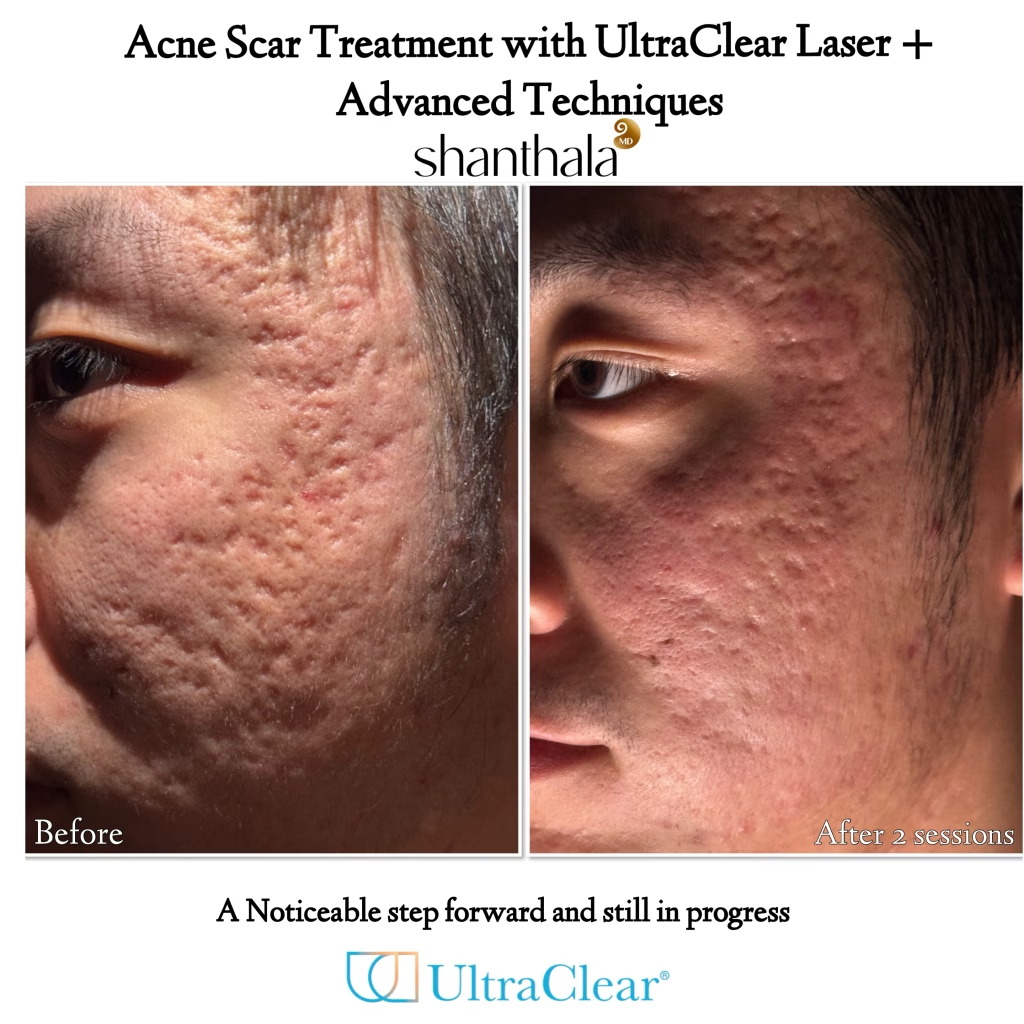
Book your consultation to learn how and why Laser resurfacing is combined with Subcision on the same day for better acne scar results. After this combination procedure, the skin may be red and bruised for a few days, and there may be some swelling and tenderness. It typically takes a few weeks or months for dermal remodeling, multiple treatments may be needed for optimal visible results. Explore our Before After Photos.
Subcision for Atrophic Acne Scars: A Minimally Invasive Solution
Atrophic acne scars can be challenging to treat, but subcision offers a proven, minimally invasive solution. This advanced procedure is designed to break the fibrotic bands tethering the skin to the underlying tissue, releasing scarred areas and improving skin texture.
Why choose Dr. Shanthala for Subcision Boston Acne Scars treatment?
At ShanthalaMD, all acne scar procedures, including Subcision, are performed by a board-certified physician only. Subcision or subcutaneous incision-less surgery, which is a precise technique that targets the root cause of atrophic scars—fibrotic tethers connecting the dermis to the subcutaneous layers. Using specialized instruments such as microcannulas, needles, wires, or blunt blades, the scar tissue is carefully released, allowing the skin to lift naturally over time.
The choice of instrument depends on the scar’s severity and the desired outcome. For many patients, microcannulas are preferred due to their reduced risk of complications and high patient satisfaction, although needles and more robust instruments may be used for deeper or more extensive scarring.
Why Multiple Subcision Sessions Are Needed
In most cases, subcision is not a one-time procedure. Each session helps release additional fibrotic tethers, making incremental improvements in scar appearance. Patients with severe scarring may require multiple treatments for optimal results.
How to maximize Acne scar results with Subcision Combination protocols?
Subcision works best when paired with other advanced treatments to maximize results. At our practice, we specialize in creating personalized treatment plans that combine subcision with the following:
Dermal Fillers and Biostimulators For Acne Scar Treatment

The above B/A photo is an example of when you combine, subcison, Lasercoring and Biostimulator like sculptra performed by Dr. shanthala.
HA fillers such as Juvederm, Restylane, RHA, Versa, Belotero are used to treat acne scars on some occasions. Bellafill is an FDA-approved long-lasting filler In addition to immediately adding volume to the skin to lift acne scars, Bellafill® helps your skin re-create its own firmer structure for a smoother appearance and lasting results. Bellafill is good for rolling and atrophic types of acne scars. A skin test is needed and performed by our physician. The rare risk of nodules or granulomas and accidental vascular occlusion should be kept in mind with dermal fillers.

3 Explore ablative & Non Ablative Lasers for Acne Scars.
Lasers are the gold standard for treating acne scars. CO2RE and FraxPro 1550 and 1940 are fractional lasers and are excellent for acne scars but may not be the BEST for all skin types. The fractional ablative CO2 laser may not be appropriate for deeper scars and it has a lot of limitations. Ultraclear laser offers a variety of treatment modalities with less pain and downtime and is safer for all skin types; one can treat deeper scars with laser-coring. The combination of laser treatments combined with PRP or Exosomes topical is a treatment that is fast, more comfortable, and requires less downtime than traditional resurfacing – enabling you to get back to your daily routine much quicker. The CO2 laser is not meant for all skin types since it has a high risk for hyper or hypopigmentation in darker skin groups. Aviclear laser is the latest in helping with acne breakouts and indirectly preventing acne scar formation.
How does Cold Microneedling with PRP helps Acne Scarring?
SkinPen medical micro-needling is a non thermal or cold needling for Acne scar treatment is by creating invisible micro-perforations into the skin to induce neo- collagenasis. MD performed advanced Microneedling with PRP is used for any type of acne scar, all skin types, but requires several treatments. The skin uses its natural repair mechanism producing collagen and elastin to repair the micro-perforations. Your skin becomes firmer and regains its elasticity. Dr. Shanthala often combines after other energy-based treatments such as Clear and Brilliant Laser or 1550 Frax Pro laser or 3DMIRACL by Ultraclear laser and PRP or Exosomes and Subcision.
Why RF Microneedling is a great choice for Acne Scar Treatment specially for Dark Skin.
RF micro-needling Intensif for acne scars is very effective by stimulating new collagen and reduction of pore size. FRF microneedling is very effective for all skin types with minimal risk of hypo or hyperpigmentation. Ultraclear laser & Laser Coring is our #1 choice for treating acne scars at ShanthalaMD. RFMN performed after subcision has better results for some scar types.combining RF micro-needling with PRPor Exosomes is shown to reduce the downtime. RF Microneedling combination with other fractional lasers modalities are our popular treatment for Acne Scars
Regenerative aesthetics in treating acne scars.
Click here to learn more about Platelet Rich Plasma (PRP), Peptides and topical application of EXOSOMES for Acne Scars